The 3:1 Reinhold
Webinar with Bettina Biolik
What if changing the way you hold the reins changed the way your horse carries itself?
Learn to create bend without getting busy with your hands
Most riders want to ride more from the seat and with quieter hands.
But the way we habitually use the reins can make that much more difficult than we realise.
In this 90-minute live webinar, we’ll explore the traditional 3:1 reinhold — and use it as a practical tool for understanding how bend, balance and posture really arise.
Webinar recording ✧ 2h 20min
4-week access to the webinar replay
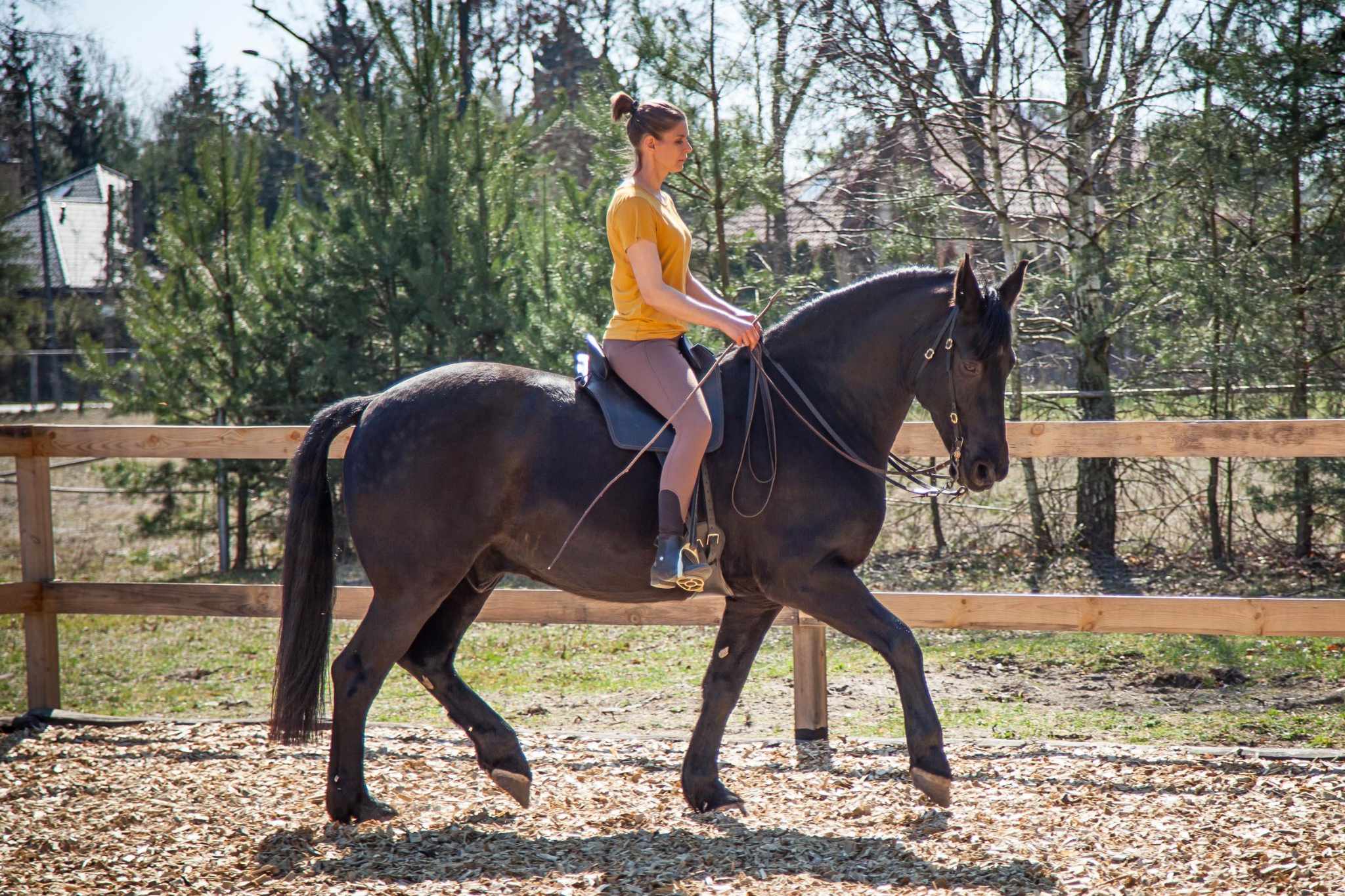
When the hands do too much
You know you are not supposed to pull the horse into a shape and try to ride with feel, kindness, and respect for the horse.
And still, the same familiar patterns can keep appearing:
The bend feels difficult to maintain.
The horse keeps falling on the inside shoulder.
Or leans on the bit.
The neck may look nicely positioned, but the horse does not feel truly supple through the body.
Or you reach a certain point in collection, and then progress seems to plateau.
The more we try to shape the horse through individual rein aids, the less we actually truly change the balance underneath.
Correct bend arises through correct balance.
And changing the way we hold the reins makes that much easier to feel!
The tool you didn't know you were missing
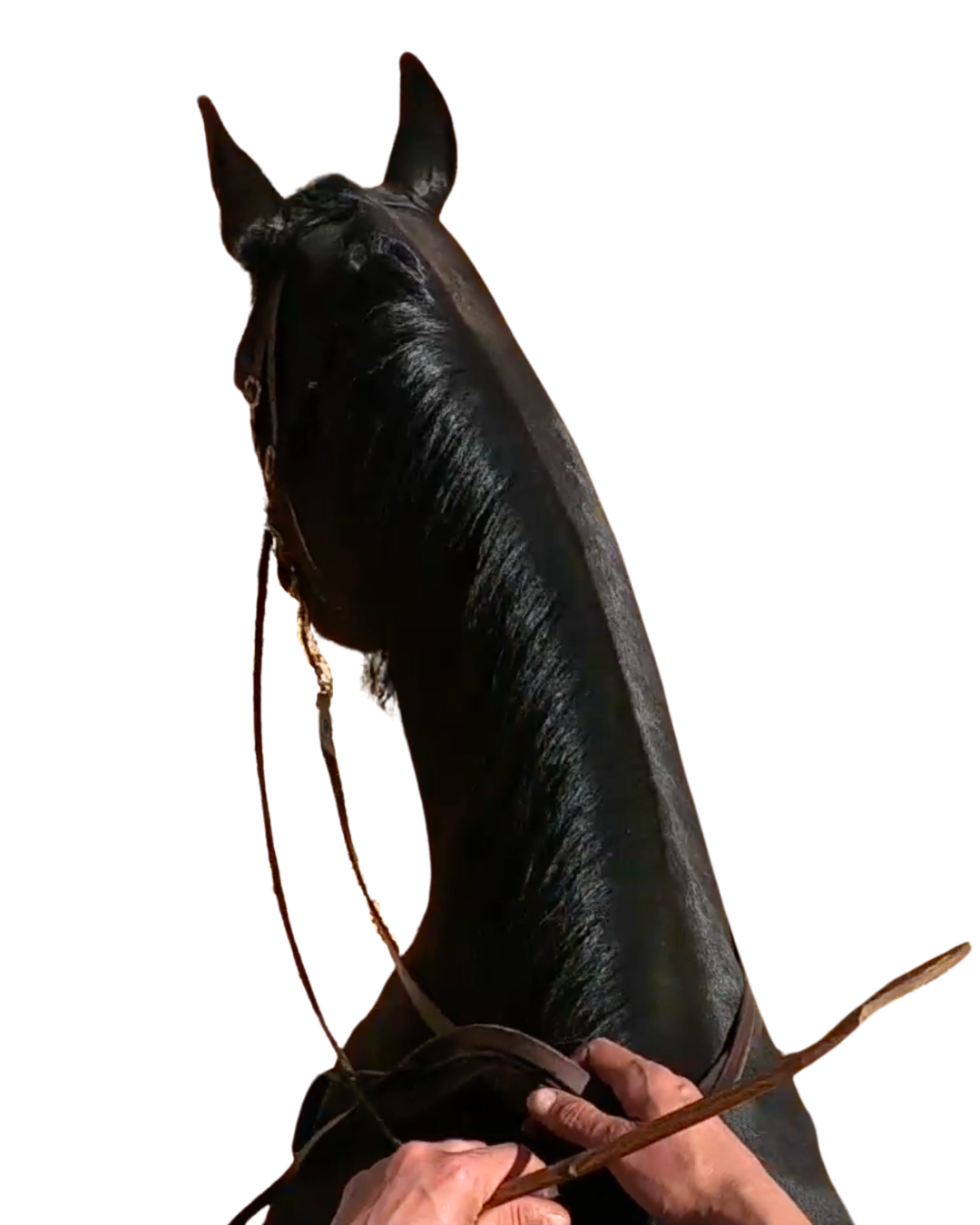
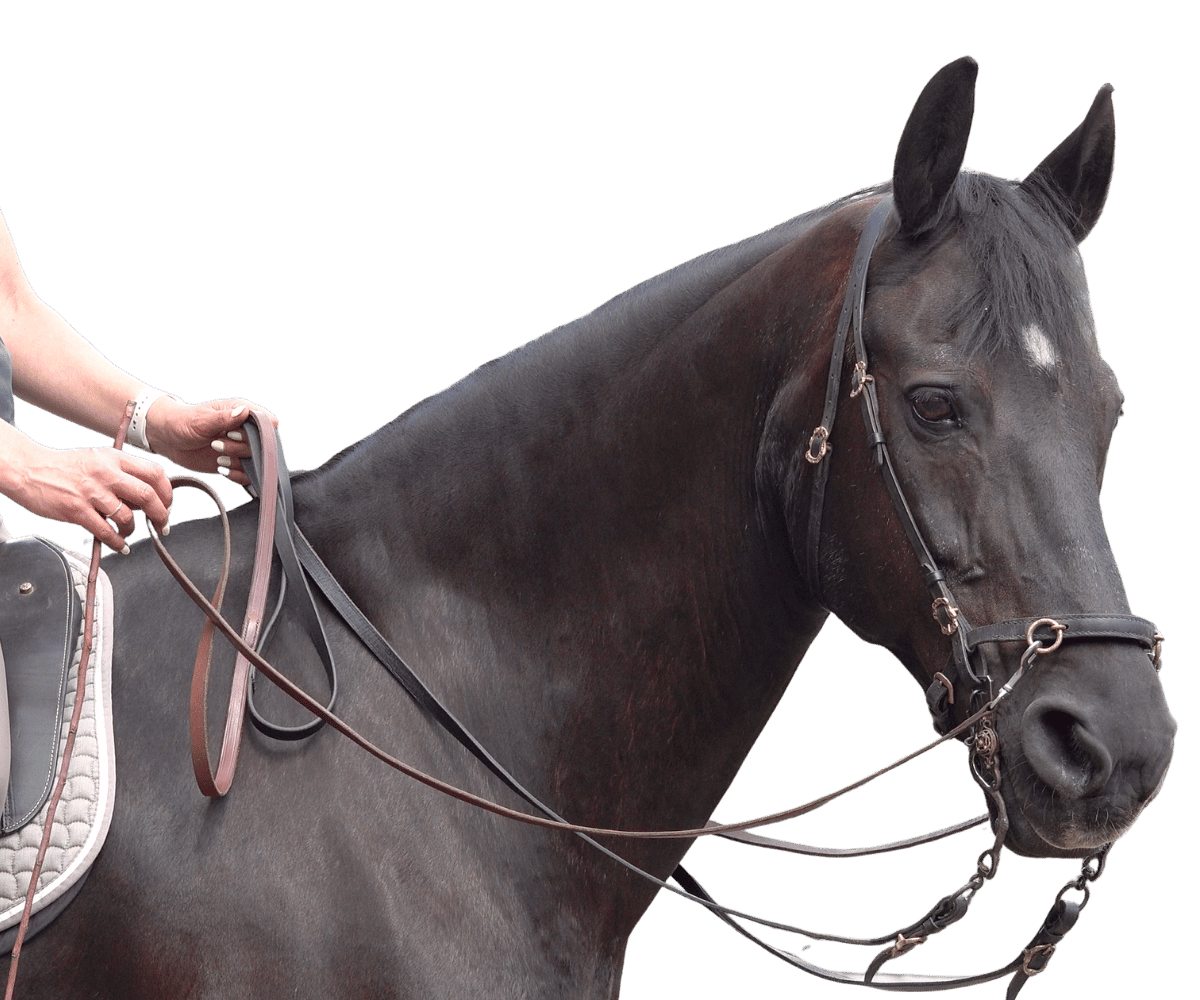
In the traditional 3:1 reinhold, three reins are held in one hand and one rein in the other.
At first glance, this may look like a minor change. But it actually has a huge effect:
It takes away some of the corrections we are used to making with our hands.
You cannot so easily manufacture the bend, reposition the head and neck or make constant separate adjustments from rein to rein.
Instead, you have to look elsewhere:
At the shoulders.
At the balance.
At your seat.
At the organisation of the horse’s whole body.
And that is exactly what makes the 3:1 rein hold such an interesting tool.
It does not simply teach you another way to hold the reins.
It shows you what your hands have been covering up and helps you balance the horse.
What changes when you begin to ride this way?
During the webinar, you will begin to see more clearly:
-
why bend cannot be created by positioning the neck alone;
-
how the reins can either support or interfere with the horse’s balance;
-
why rein length matters for the movement of the whole body;
-
how the shoulders influence the quality of the bend;
-
what happens when you cannot rely on constant unilateral corrections;
-
and how quieter hands can make the communication through your seat much clearer.
The goal is not to use your hands less because “hands are bad.”
The goal is to understand what the hands are responsible for, and what they are not.
I've taught the 3:1 rein hold to riders around the world.
A sentence I hear often is, "Why didn't anyone ever show me this before?"
Riding 3:1 is a game changer!
Elaine, England
Is this webinar for you?
This webinar is for you if:
-
You want to ride more from your seat and less from your hands;
-
You find yourself using the inside rein to create or maintain bend;
-
Your horse falls through a shoulder, overbends or braces despite your attempts to correct it;
-
You want to understand more deeply how the reins influence balance and posture;
-
If you are interested in classical or academic principles but want to understand the biomechanics behind them;
-
You already use the 3:1 reinhold and would like to understand it at a much deeper level.
You do not need to ride in the Academic Art of Riding.
You do not need a highly trained horse.
And you do not need to use a curb or any particular type of tack.
The principles we will explore are relevant whether you ride with a snaffle, curb, cavesson or bitless setup.
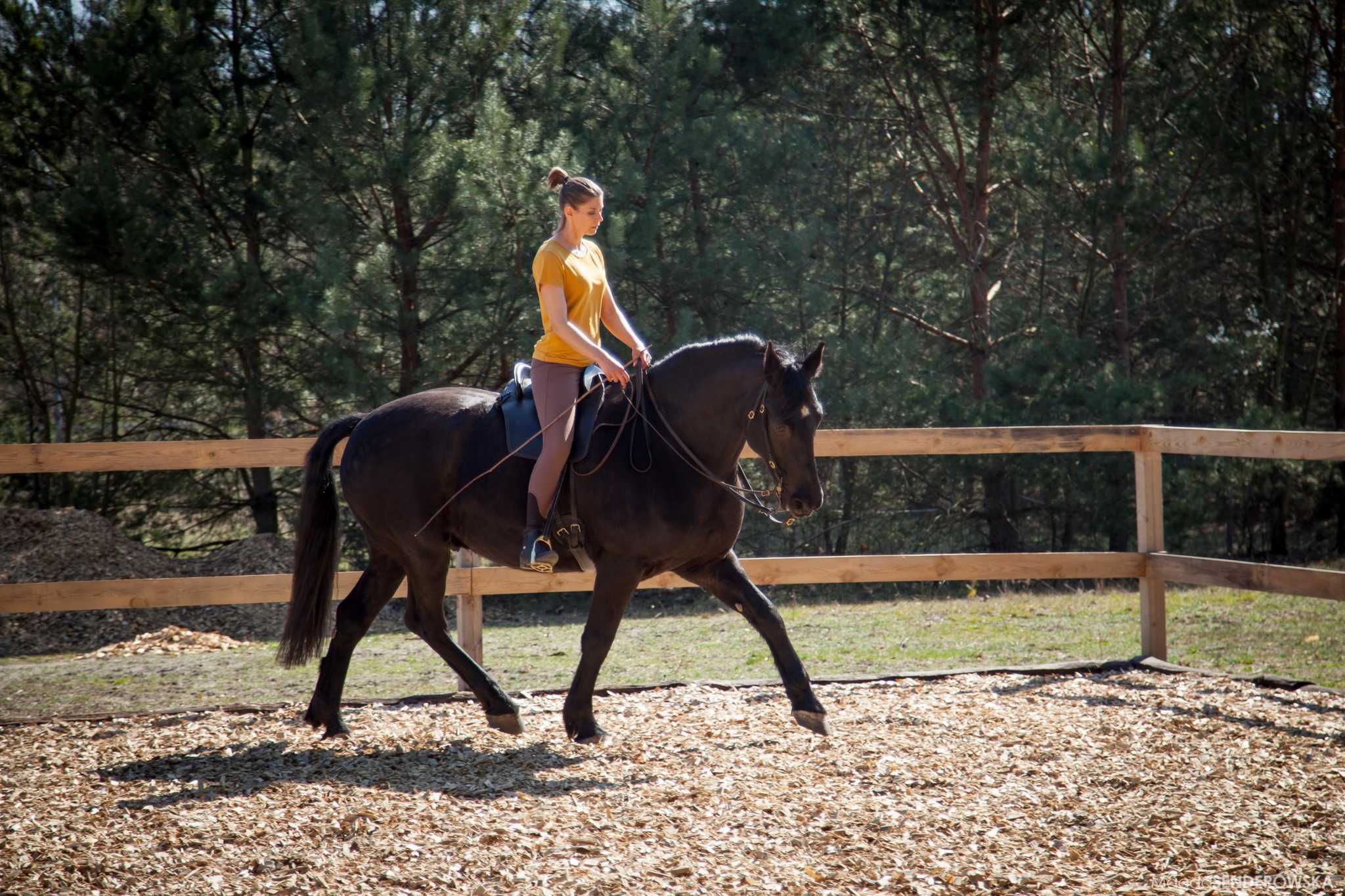
Inside the webinar replay
In the webinar, we'll cover:
Why the 3:1 reinhold is so effective, and what it changes in the horse's body.
How it benefits your seat.
The 3:1 reinhold adapted for modern tack — bitted and bitless combinations, including traditional set-ups like the semi-cavesson and curb.
The transition to one-handed riding.
Rein length — the academic understanding of rein versus the modern idea of "contact".
Why a too-short rein blocks the horse's movement and brings it onto the shoulder.
The nodding movement of the poll as an indicator of correct back movement.
The movement of the hand — following the nodding.
The idea of "longeing yourself".
How to change the rein without getting tangled in two sets of reins.
Standstill exercises to build the feel before you're in motion.
Live practice during the webinar — have a bridle or cavesson with two sets of reins ready, and we'll work through it together!
Get instant access to the webinar replay
The 3:1 Reinhold
A Forgotten Key to Bend and Balance
2h 20min · Replay available for 4 weeks
Webinar Replay
€37
-
140-minute session
-
4 weeks replay access
-
Get feedback for your questions
Already a member of the Art of Riding Classroom? This webinar is included in your membership — no need to purchase a ticket.
Would you like to go deeper?
If you know that you will want to revisit the material or work with it over a longer period, you can choose the Lifetime Access option.
Lifetime Access — €97
Includes:
-
lifetime access to the webinar recording;
-
the webinar slides as PDF;
-
two follow-up live Q&A sessions;
-
the opportunity to bring your own questions and receive personal feedback as you experiment with the material.
Who will be teaching you?
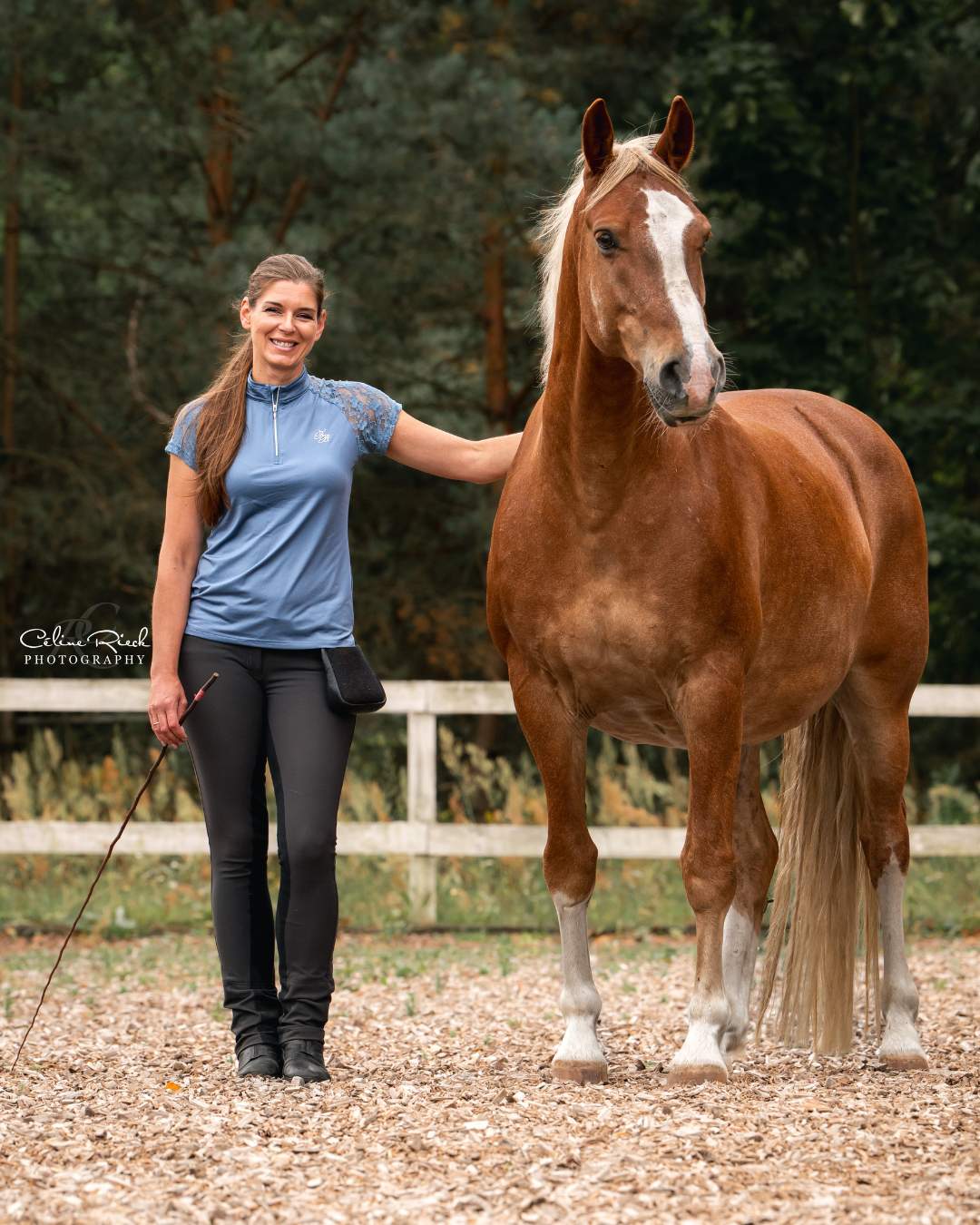
I’m Bettina Biolik, a professional dressage coach and licensed Bent Branderup® Trainer.
I have been teaching riders and horses internationally for many years, both in person and online, and I am a member of the Knighthood of the Academic Art of Riding.
My work centres around one question:
How can we help the horse find better balance while making our own aids clearer, quieter and easier to understand?
I am fascinated by the old riding traditions, but not because I believe everything historical was automatically better.
I want to understand why certain tools existed, what they taught the rider and horse, and which of those ideas are still useful to us today.
The 3:1 reinhold is a wonderful example. It is simple.
But once you begin working with it, it can reveal a surprising amount about the way you ride.
I have ridden for 50+ years and I have short arms — rein contact has been such a problem for me, with conflicting information being given about the correct length. For the first time ever, I understood the length with so much more clarity.
You truly are a gifted teacher!
Susan, Scotland
For a long time, I have been very interested in learning the 3:1 rein hold. Yet, I could find no clear resource for learning its application, only a video showing one HOW to hold the four reins.
Your presentation is a complete revelation! I need to watch the practical elements again, but I learned SO much!
Beverley, Spain
My guarantee
I want this webinar to give you genuinely useful information that you can take back into your riding.
If you attend the webinar or watch the recording and genuinely feel that you did not learn anything useful, simply write to me and I will refund your €37 ticket.
Frequently asked questions
How long is the replay available?
Until 1st October 2026.
If you choose Lifetime Access, the recording remains available permanently.
Do I already need to know the Academic Art of Riding?
No.
I will explain the relevant principles during the webinar. You can join whether you are completely new to academic riding or have been studying it for years.
Do I need special tack?
You'll want a bridle or cavesson with two sets of reins to practice along live. We'll cover bitted and bitless combinations, including traditional options like the semi-cavesson and curb, so you can see what suits your horse.
Can I use this bitless?
Yes.
The underlying principles are not dependent on one particular bit. We will also look at different tack configurations.
Is this suitable for beginners?
Yes, provided you are interested in understanding your riding rather than simply being given a quick technique to copy.
More experienced riders will also find plenty of depth in the material.
What if I already use the 3:1 reinhold?
Then the webinar is particularly interesting.
We will go much further than simply explaining how to hold the reins and look at why the reinhold works, what it reveals and how it connects to balance, bend and one-handed riding.
I'm a member of the Classroom — do I still need to pay?
No — this webinar is included in your Classroom membership. You will find the link to the webinar inside the Classroom.
What if changing the way you hold the reins helped you feel more clearly how bend, balance, shoulders, seat, and contact belong together?
Watch the webinar recording and learn more about the traditional 3:1 rein hold as a practical tool for quieter hands, clearer aids, and a more supple conversation with your horse.
2h 20min webinar replay · 4-week access
Academic Art of Riding Bettina Biolik
Podkowa Lesna, Poland
© Copyrights by Academic Art of Riding Bettina Biolik. All Rights Reserved.